The Timeless Power of Western Horse Art: Why Cowboy and Equestrian Paintings Still Captivate Modern Collectors
Western Horse Art and Cowboy Paintings: Capturing the Spirit of Motion and Freedom
There are certain images that seem to belong to the collective imagination of humanity. Among them, few are as powerful as the image of a rider on horseback, framed by dust, wind, and open land. Western horse art especially scenes depicting cowboys, horses, and the dynamic culture of ranch life has remained deeply captivating for generations.
In an age where digital imagery floods our screens every second, traditional paintings that capture the spirit of the American West continue to stand out. They evoke something older and deeper: freedom, courage, discipline, and the intimate relationship between human and animal.
When collectors search for western horse paintings, cowboy wall art, or equestrian artwork, they are often searching for more than decoration. They are searching for a feeling.
A feeling of movement.
A sense of dust rising from the ground.
The tension of a rope in mid-air.
The raw energy of a horse responding to its rider.
Great equestrian art has the ability to freeze those fleeting moments.
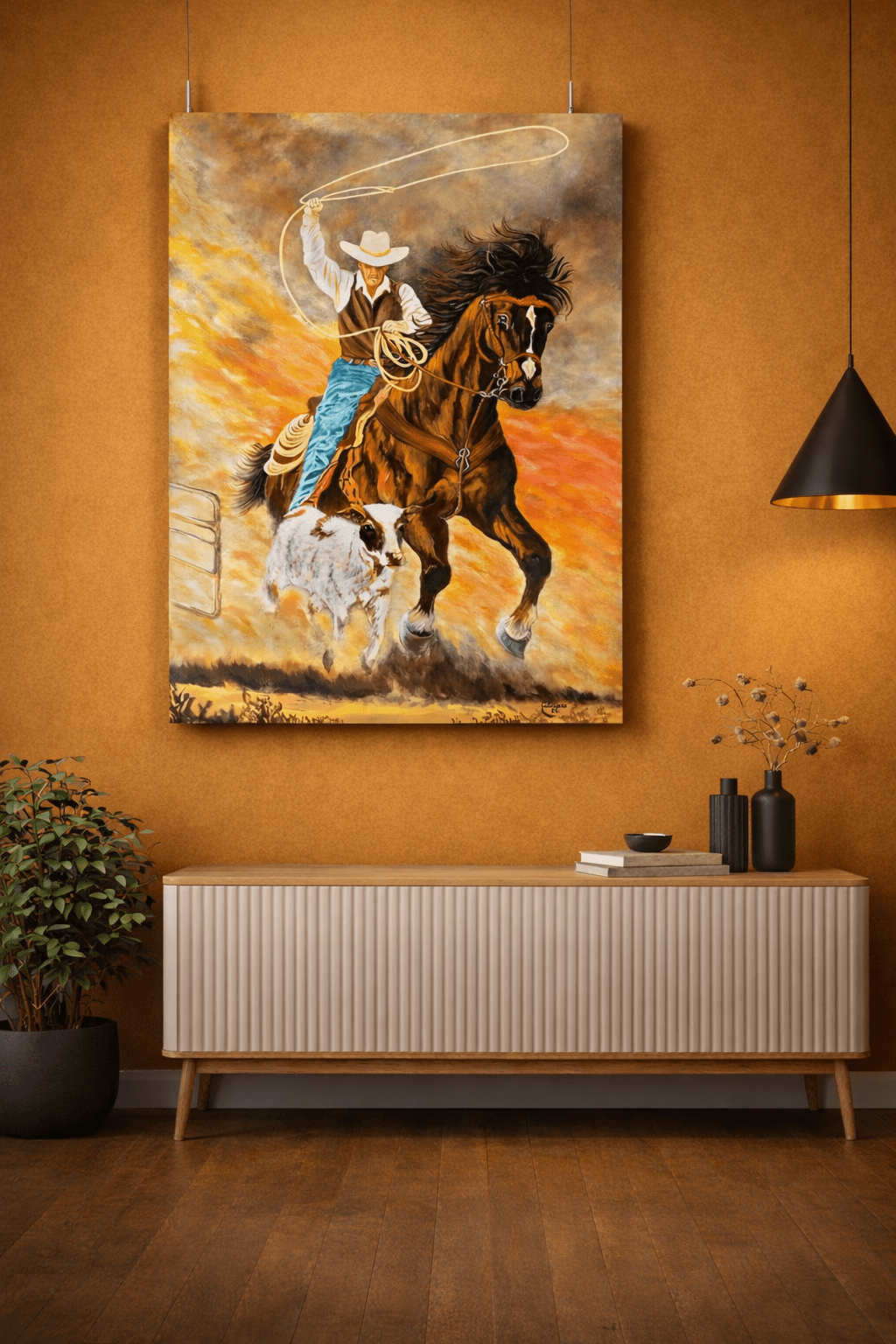
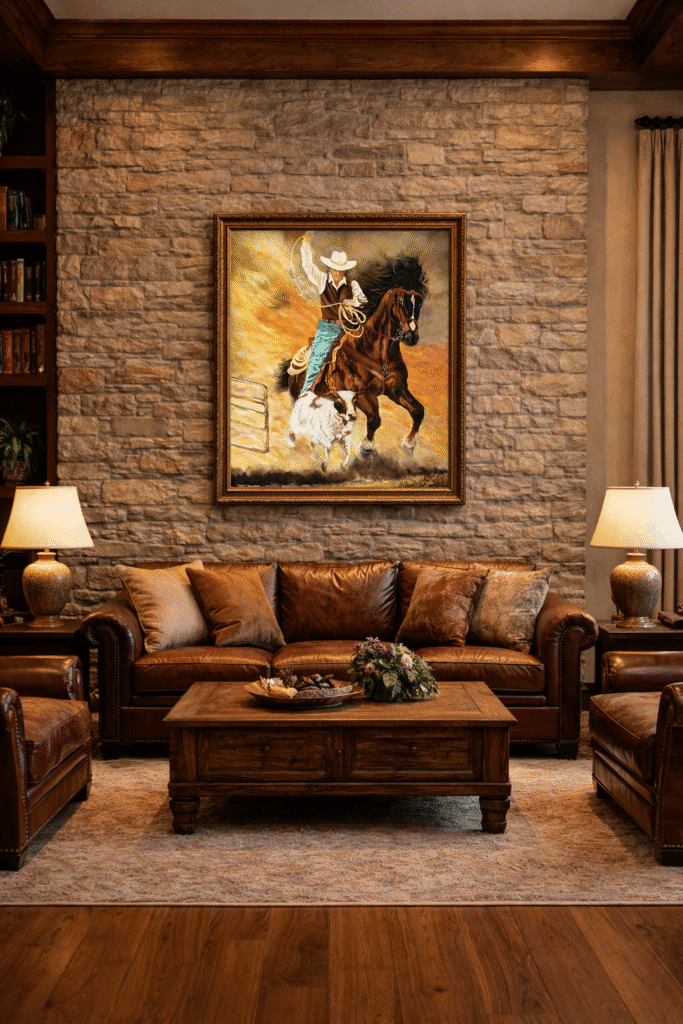
The painting you see here attempts to capture one of those moments.
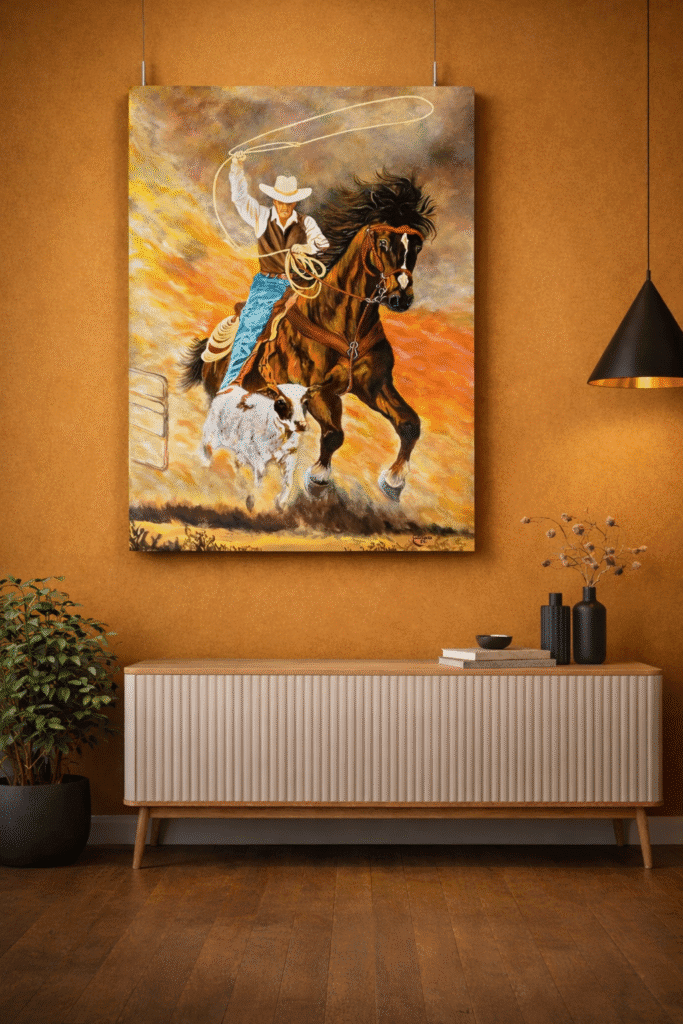
A rider leaning forward, the horse surging ahead, the rope cutting through the air in a looping arc. Beneath them, a calf runs through dust as the scene explodes with movement and color. The sky itself seems to swirl with heat and energy.
Scenes like this are not only part of western history—they are part of a living culture.
Cowboy Lassoing: The Art of Capturing Motion and Mastery
The concept of cowboy lassoing represents one of the most iconic and visually dynamic moments within western culture. It is not simply an action—it is a precise interaction between timing, skill, and instinct. The instant a cowboy swings a rope and releases it into the air, everything depends on coordination between rider, horse, and target.
In artistic terms, cowboy lassoing offers a powerful opportunity to capture movement at its peak. The looping rope creates a natural visual guide, drawing the viewer’s eye across the composition while adding tension and rhythm to the scene. At the same time, the horse’s forward motion and the rider’s focused posture reinforce the sense of urgency and control.
This is exactly the kind of moment that inspired the painting presented at the beginning of this post. The swirling rope, the dust rising beneath the hooves, and the forward surge of the horse all come together to embody the essence of cowboy lassoing—not just as a technique, but as a symbol of mastery over chaos.
For collectors searching for artwork that conveys energy, authenticity, and storytelling, scenes centered around cowboy lassoing hold a special appeal. They capture a fleeting second that, in real life, disappears instantly—but on canvas, becomes timeless.
Why Western Equestrian Art Remains So Popular
Search trends show that western wall art, cowboy paintings, and horse artwork consistently attract thousands of monthly searches from collectors, interior designers, ranch owners, and lovers of western heritage.
But why does this genre continue to resonate so strongly?
There are several reasons.
1. The Symbol of Freedom
The horse has always represented freedom. When paired with the cowboy figure, that symbolism becomes even stronger.
The cowboy is often seen as a symbol of independence, resilience, and self-reliance. A rider guiding a powerful horse through open land reflects a lifestyle many people admire—even if they have never stepped foot on a ranch.
Western art captures that mythic freedom.
2. Movement and Energy
Horse paintings have a unique advantage in visual art: motion.
The muscles of a horse in stride, the lift of the mane in the wind, the rider’s posture, the flying rope—these elements create dynamic compositions that instantly grab attention.
Unlike static portraits or landscapes, equestrian scenes often feel alive.
In the painting shown here, the horse is not simply standing. It is charging forward, hooves raised, mane flying, dust exploding beneath it.
The rope arcs across the sky like a drawn line of light, leading the viewer’s eye across the entire composition.
Movement is the heart of this kind of artwork.
3. Cultural Heritage
Western equestrian culture is more than rodeos and ranches. It represents a long tradition of working with horses, managing cattle, and surviving in rugged environments.
For many people—especially in the United States, Canada, Australia, and parts of Latin America—these traditions are still very real.
Even for those living in cities, western art connects them to that heritage.
A painting like this becomes more than décor. It becomes a story on the wall.
4. Interior Design Appeal
Another reason western horse art continues to grow in popularity is its visual strength in interior spaces.
Large, dramatic paintings work beautifully in:
- Ranch houses
- Rustic interiors
- Modern homes with natural tones
- Offices or studios
- Western-themed spaces
- Collectors’ galleries
The warm tones of dust, earth, leather, and sunset skies often complement wooden furniture, textured walls, and warm lighting.
Placed correctly, a strong equestrian painting can become the centerpiece of a room.
Capturing a Moment: The Story Behind the Painting
Every painting begins with an attempt to capture a moment that cannot last.
In this case, the moment is the instant between control and chaos.
The rider has just cast the rope. The loop spins through the air while the horse surges forward. The calf runs beneath them in a cloud of dust.
Everything happens in seconds in real life.
But painting allows that moment to stretch into something timeless.
The goal was to create a sense of motion that pulls the viewer into the scene.
You can almost feel:
- the heat in the sky
- the speed of the horse
- the tension in the rope
- the rhythm between rider and animal
Color played a big role in this effect.
The warm oranges and golden dust tones give the painting an atmosphere similar to a late afternoon on open land. The sky is not calm—it swirls with energy, reflecting the intensity of the action below.
The horse itself becomes the visual anchor of the composition.
Strong, muscular, and powerful, it drives the entire scene forward.
A Humble Contribution to Western Equestrian Culture
I want to say something honestly.
I am not an expert in western equestrian art.
Many artists have dedicated their entire careers to studying the western lifestyle, rodeo culture, ranch life, and the anatomy and movement of horses.
My intention here is not to claim mastery over that tradition.
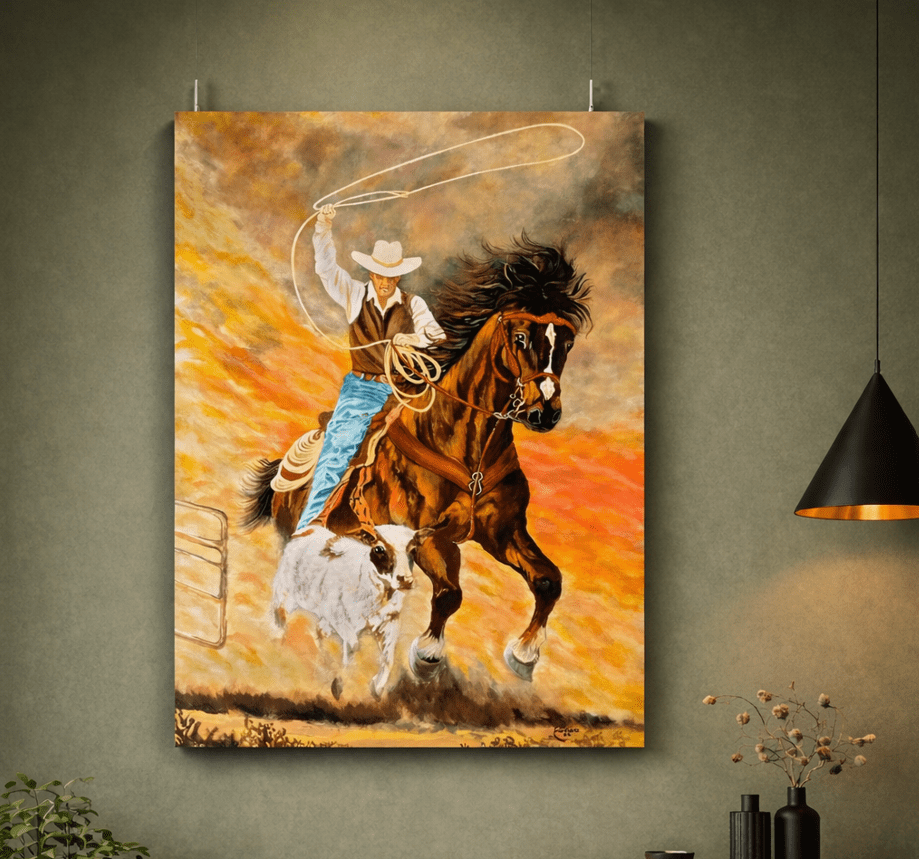
Instead, this painting is my humble artistic contribution to a culture I deeply admire.
Western horse culture carries something beautiful: respect between rider and horse, discipline learned through practice, and a connection with nature that feels increasingly rare in modern life.
As a painter, I try to approach that world with curiosity and respect.
Sometimes an outsider perspective can also bring a different energy to a familiar subject. My focus is less on strict documentary realism and more on emotion, movement, and atmosphere.
In this piece, the sky becomes almost abstract, swirling with color and dust, while the rider and horse remain grounded in realism.
It is my way of translating the feeling of the moment rather than just the technical details.
The Emotional Impact of Horse Paintings
Collectors often say something interesting when they buy horse paintings.
They say the artwork makes them feel something immediately.
That emotional connection is powerful.
Horses themselves are emotional animals. Their body language, posture, and energy communicate strength, alertness, and instinct.
When a painting captures that well, viewers instinctively respond.
In the painting shown here, several elements contribute to that emotional impact:
The horse’s forward motion
The raised legs and flowing mane suggest unstoppable momentum.
The rope in the air
The sweeping loop creates tension and anticipation.
The dust beneath the hooves
Dust clouds reinforce speed and energy.
The rider’s posture
Balanced yet intense, showing control over a powerful animal.
Together, these elements create a narrative without needing words.
The viewer completes the story in their mind.
Western Art in the Modern World
One might assume that western art belongs only to rural environments or traditional ranch houses.
Interestingly, the opposite is happening.
Modern collectors—especially younger ones—are rediscovering western themes and placing them in contemporary spaces.
Minimalist homes, loft apartments, and modern offices often benefit from one strong, expressive painting.
A dynamic equestrian artwork can bring warmth and movement into otherwise neutral spaces.
Interior designers often recommend large paintings with:
- strong motion
- bold colors
- clear focal points
Horse paintings often satisfy all three.
That is why searches for western wall art and cowboy paintings for living rooms remain consistently high online.
The Relationship Between Rider and Horse
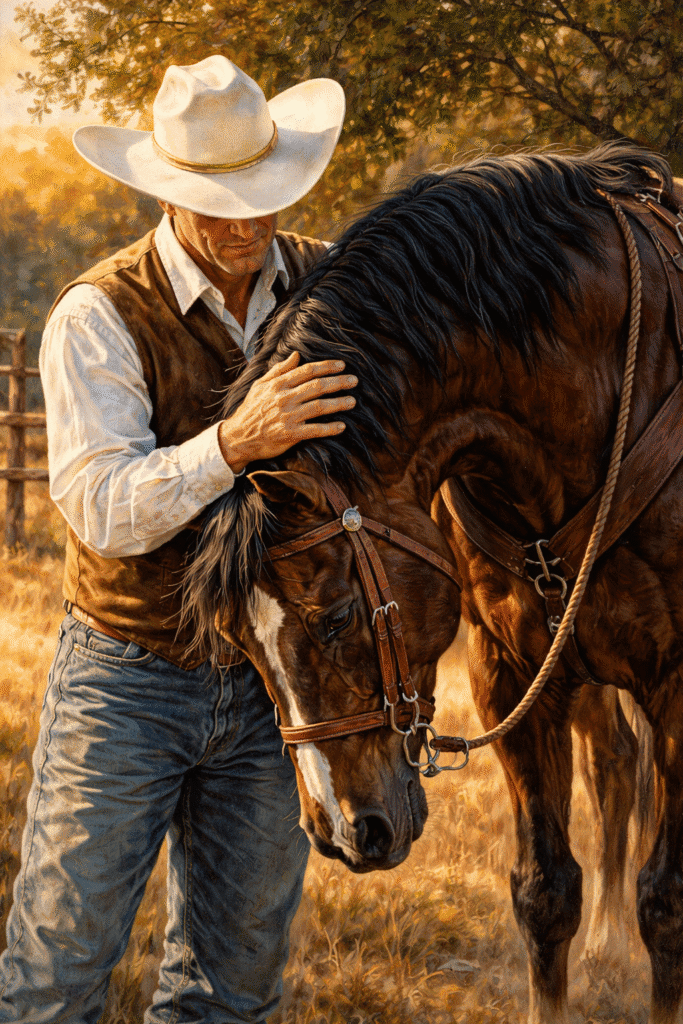
Perhaps the most fascinating aspect of equestrian art is the relationship it depicts.
A horse is not simply a tool or a vehicle.
It is a powerful, sensitive animal capable of extraordinary partnership with humans.
In ranch culture and rodeo traditions, the rider and horse must operate almost as one organism.
The rider reads the horse’s movements.
The horse responds to the rider’s cues.
This mutual trust creates incredible scenes of coordination and athleticism.
In a roping moment like the one shown in this painting, timing is everything.
The horse must accelerate and position correctly.
The rider must release the rope at the perfect moment.
A fraction of a second can determine success or failure.
Capturing that tension is what makes scenes like this so visually compelling.
Why Collect Original Artwork
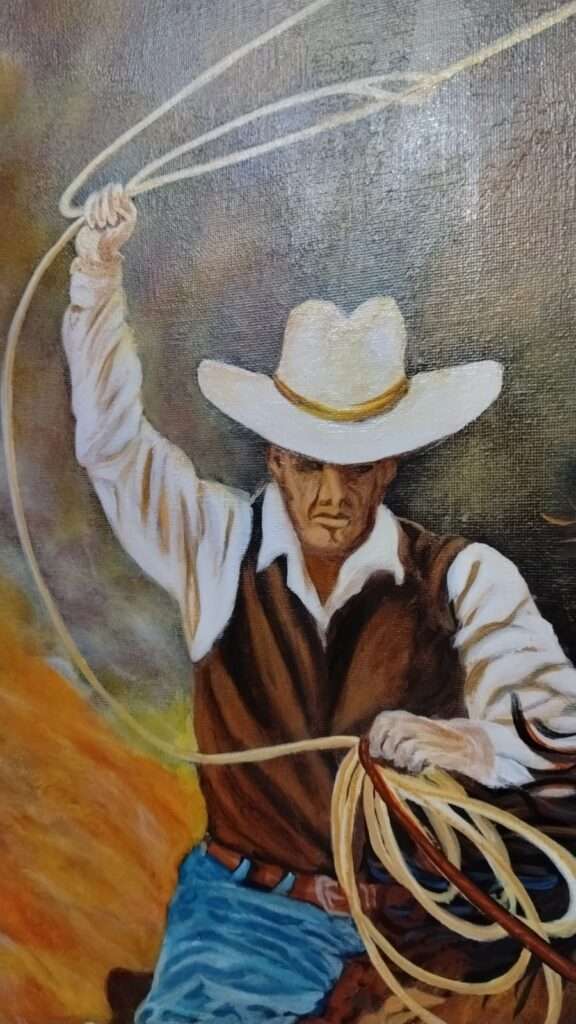
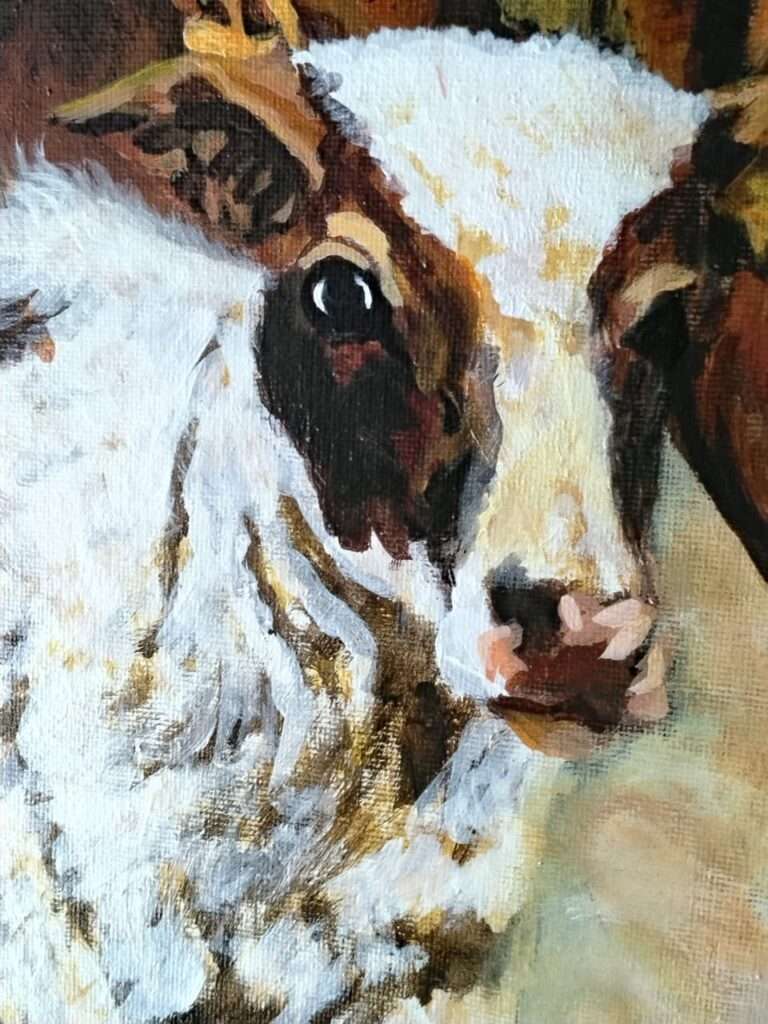
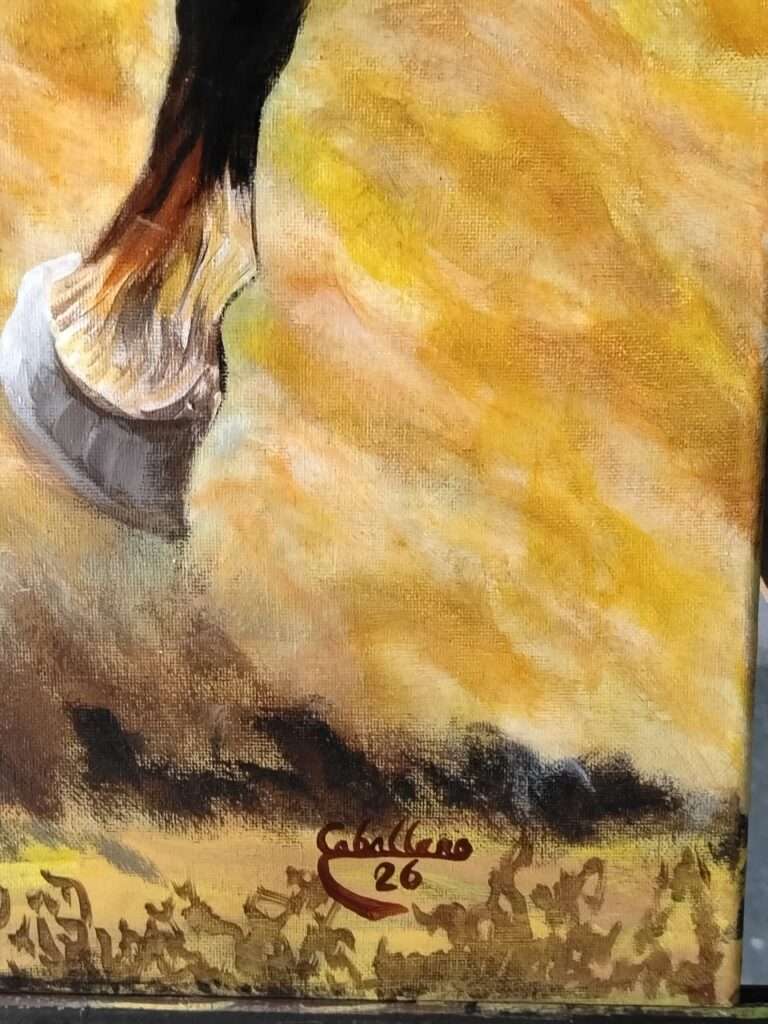
In a world dominated by prints and digital reproductions, original artwork carries a different kind of presence.
An original painting has:
- real texture
- visible brushwork
- subtle variations of color
- physical depth on the canvas
Light interacts with the paint differently than with a printed surface.
That means the artwork changes slightly depending on the lighting and viewing angle.
Many collectors appreciate this living quality.
Original art also represents a unique moment in the artist’s life. No two pieces will ever be exactly the same.
That uniqueness is part of what makes collecting art such a personal experience.
A Personal Invitation to Follow the Artistic Journey
Art is never created in isolation.
Each painting is part of a longer journey of observation, practice, and exploration.
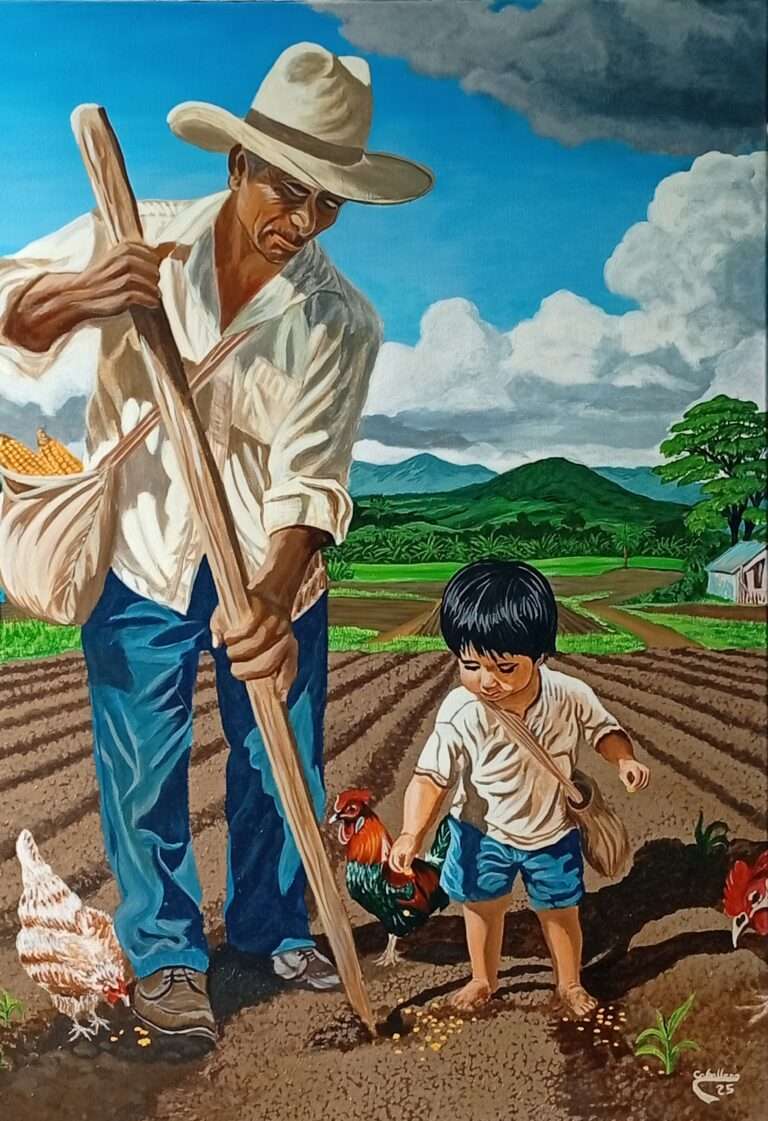
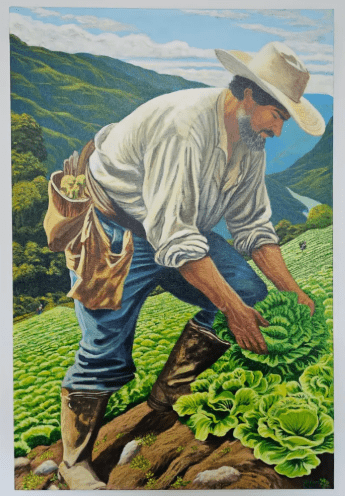
My work focuses mainly on figurative and realistic painting, often inspired by traditional rural life, cultural scenes, and everyday moments that carry character and story.
From time to time, I also explore themes such as horses, western imagery, and dynamic scenes, but my main interest lies in capturing people, movement, atmosphere, and the spirit of traditional life.
If you enjoy realistic figurative art and costumbrista-inspired scenes, I regularly share more of my work and studio process on Instagram.
You can find my work here:
Instagram:
@caballeroart25
There I often post:
• new paintings
• studio progress
• close-up details of brushwork
• ideas and studies for future pieces
Sometimes seeing the evolution of a painting—from the first ideas to the finished canvas—reveals the quiet story behind the work.
Final Thoughts: The Spirit of the West on Canvas
Western equestrian culture carries something timeless.
It speaks of wide landscapes, physical skill, and the deep partnership between human and horse.
Even for those who have never ridden a horse or stepped onto a ranch, the imagery of the cowboy and horse remains powerful.
Perhaps it reminds us of something we instinctively understand:
the desire for freedom, courage, and connection with the natural world.
This painting attempts to capture a small fragment of that spirit.
A rider.
A horse in motion.
Dust rising beneath powerful hooves.
A rope slicing through the air.
A moment of action suspended forever on canvas.
If this scene sparks curiosity, imagination, or emotion, then the painting has already fulfilled its purpose.
And if you would like to see more of my work or follow future pieces as they emerge, feel free to visit my artistic space online.
You can explore more paintings and updates through my Instagram:
@caballeroart25
caballeroart@gmail.com